FAST SAME DAY & AFTER HOURS DELIVERY


Visit Our Showroom For Mobility Scooters, Lift Chairs & More
We Deliver to Your Area


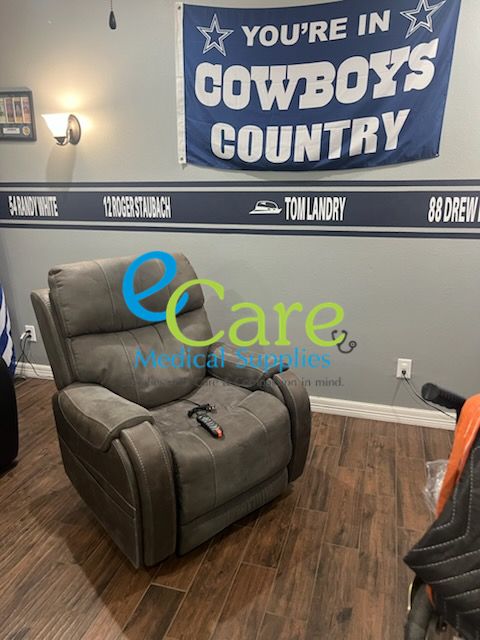
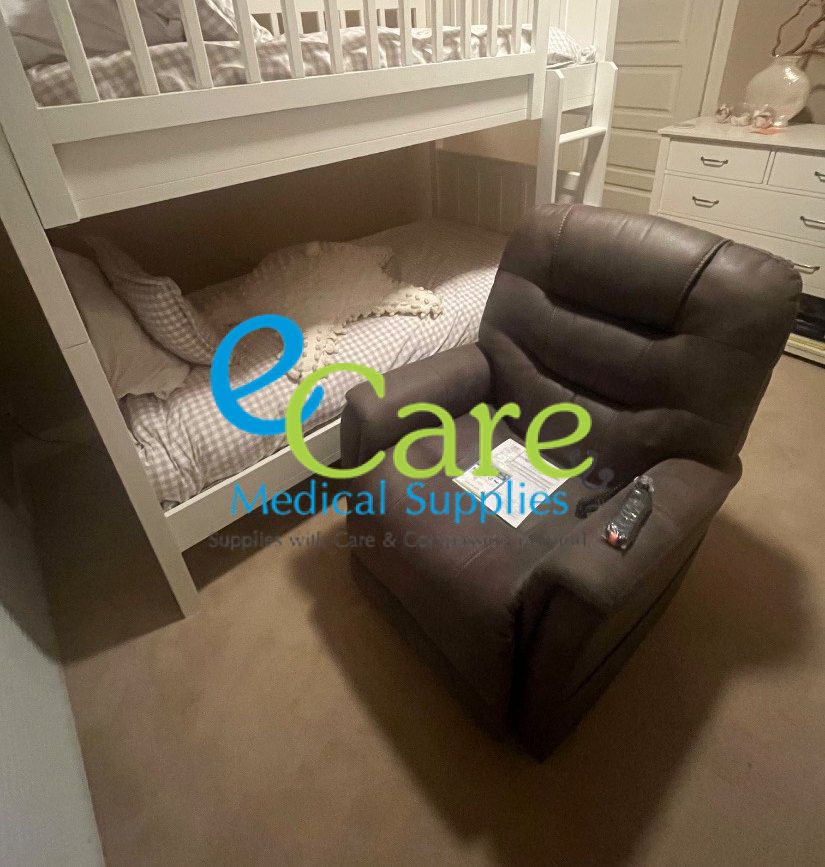
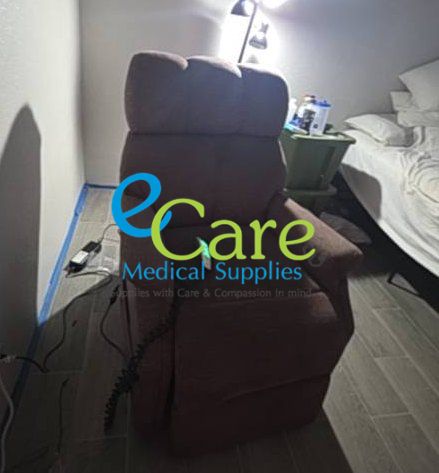
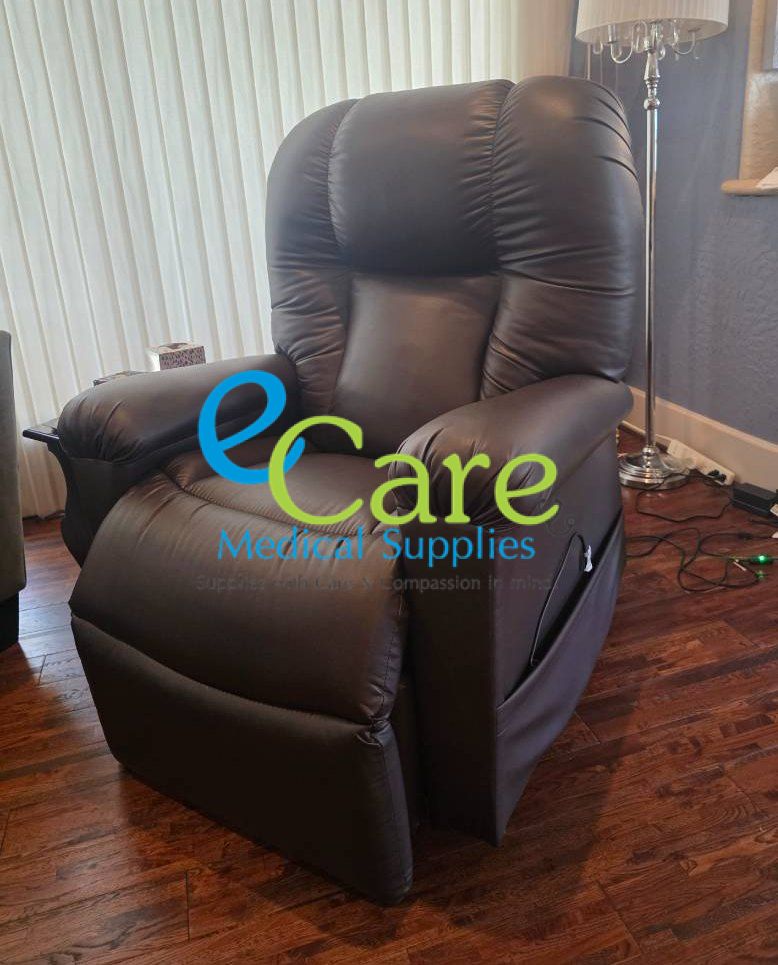
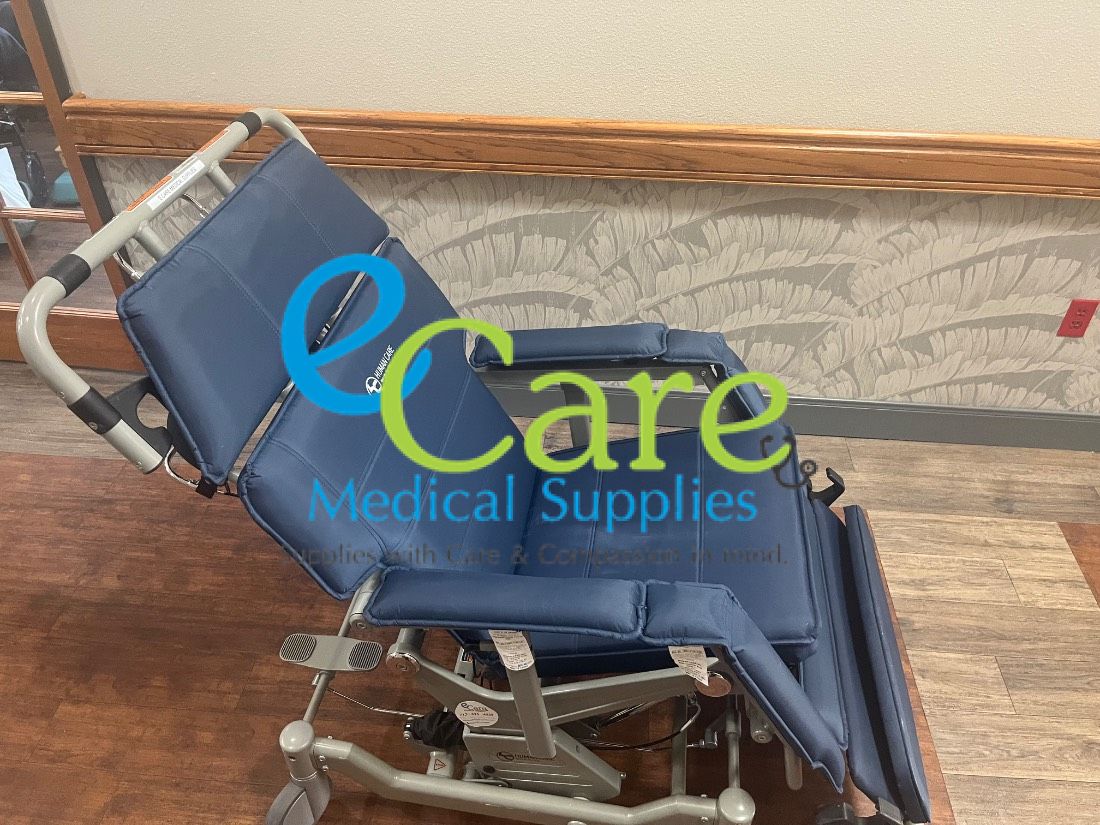
I cannot say enough wonderful things about our experience with E Care Medical Supplies! My mother recently had surgery, and we needed a medical recliner for her recovery. We called this morning, and they immediately made arrangements to have it delivered by 2 PM the very same day!
A special thank-you to Nick, who drove an hour to deliver the chair, brought it inside, set everything up, and patiently walked us through how to use it. He was incredibly kind, professional, and thorough.
When you’re caring for a loved one after surgery, this level of responsiveness, compassion, and service means the world. From start to finish, E Care made the entire process effortless. Thank you, Nick and the E Care team, for going above and beyond! Highly recommend!


Don’t know of any other medical supply company who would do this, thank you, thank yo


.


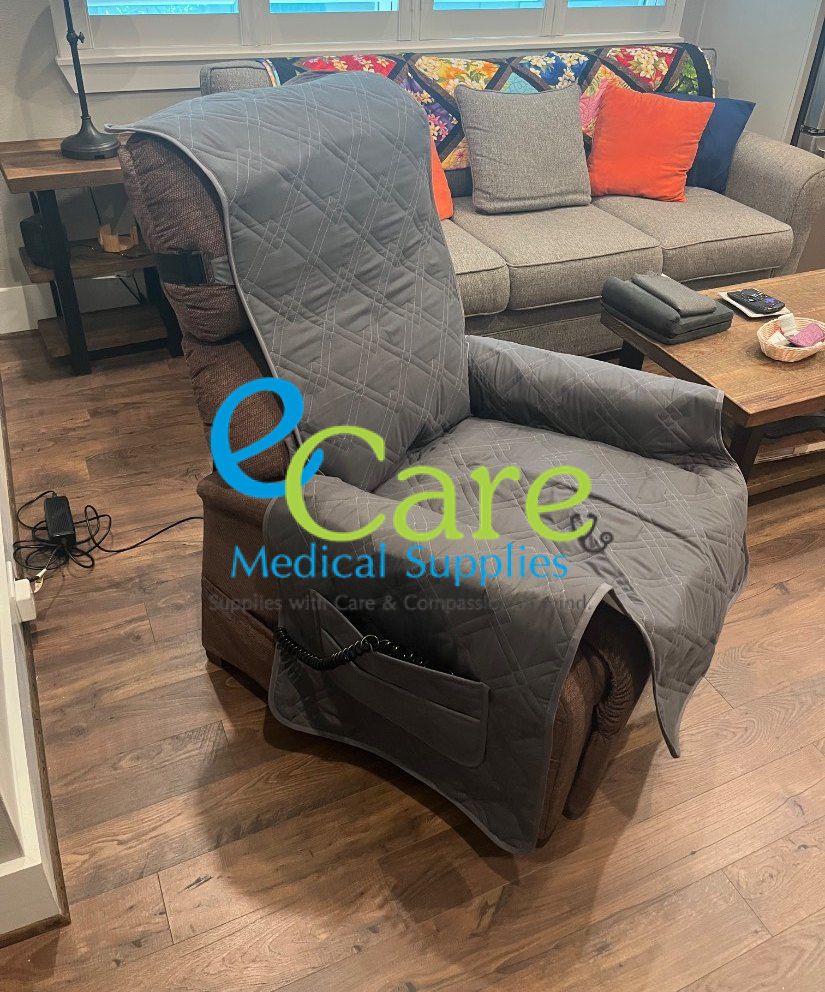
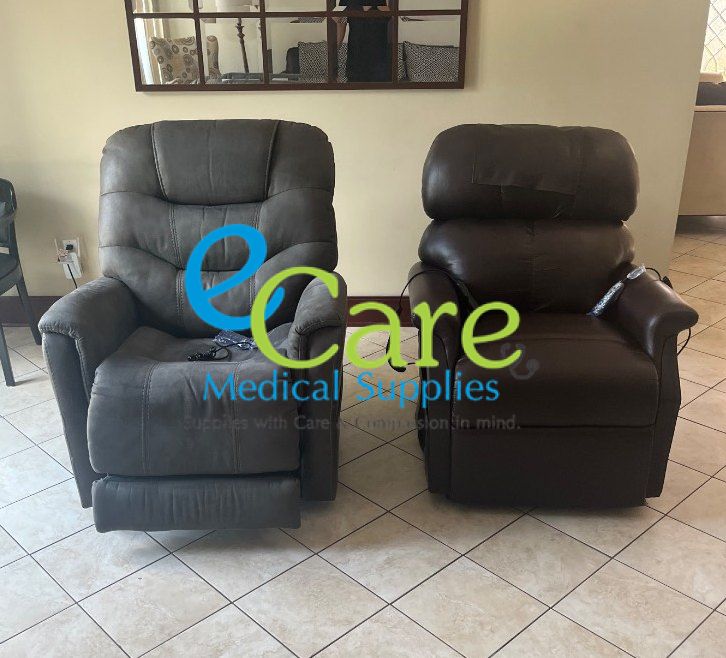
The reclainer was delivered very clean and wrap in plastic. Also I recommend this company. All the service is very professional.
Thanks.


Sincerely
Todd Novak


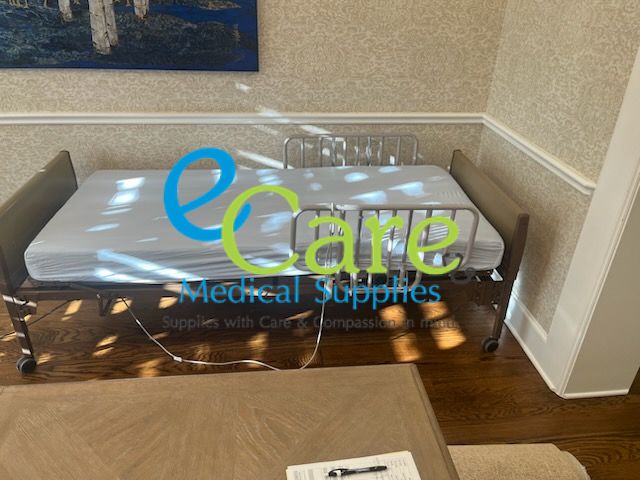
I had a great experience with eCare Medical Supplies. James was my delivery specialist and went above and beyond to ensure everything went smoothly. He took extra time to make sure the rental equipment was installed properly and that I was fully trained and comfortable using it. He was extremely professional, patient, and knowledgeable.
When James returned to pick up the equipment, he was just as kind and courteous. He checked in to see how the equipment worked for me and made the entire process seamless from start to finish. Excellent customer service—thank you, James and the eCare team


The services and products from this company are outstanding - definitely five ⭐️. The delivery was on time and professional.
James was our representative and carefully explained the features of the wheelchair and its proper use. James is outstanding ⭐️⭐️⭐️⭐️⭐️ - we very much appreciate his concern and support.
We recommend E Care Medical Supply to anyone in need of excellent equipment and service at fair prices -
David & Donna


James and Aron were the best of the best!
Friendly, thorough, and very knowledgeable, I could not have asked for a better experience.
Of course, I hope to not need medical equipment rental again, but if I do, E Care will be my go to, and hope that delivery will be by James and Aron!
If only all businesses could be run in such an efficient and friendly manner.

The in store personnel were prepared to answer all our questions, and helped with our selection.
The delivery was actually earlier than expected with the delivery team of James and Aron. They were extremely professional and made sure everything was installed and working properly and then went over its operation.
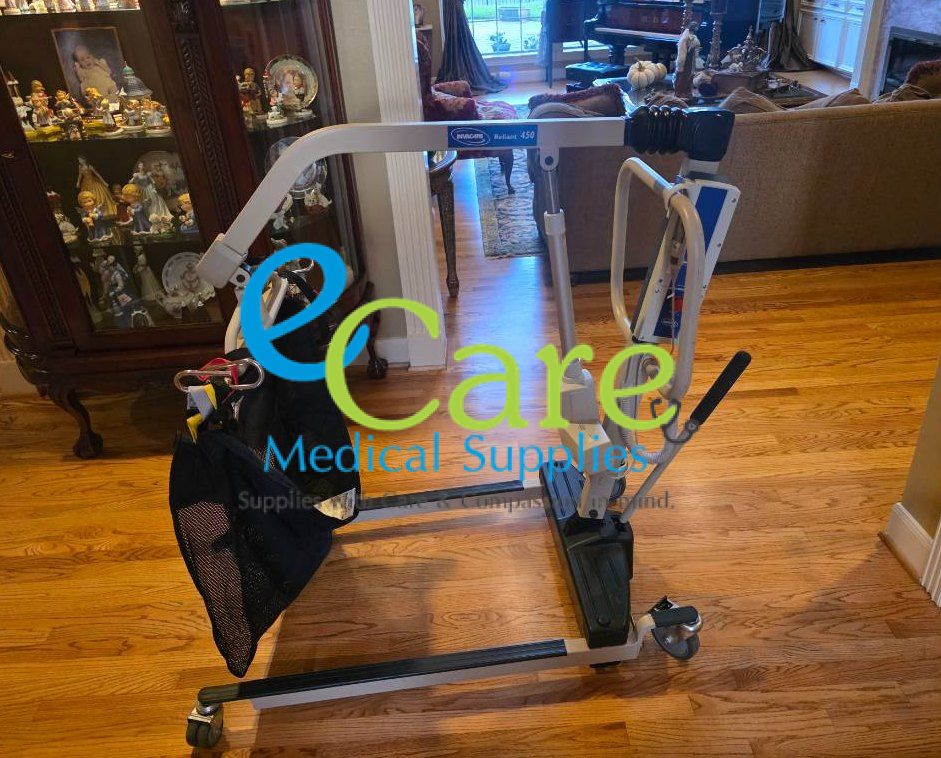





E Care's Blog Post - The Drive Medical Levantar Electric Patient Lift (FLP500): A Straight Answer for Home Caregivers

There is a moment most home caregivers remember exactly. Their loved one needs to move from the bed to the wheelchair, or from the chair to the toilet,...
The Drive Medical Levantar Electric Patient Lift (FLP500): A Straight Answer for Home Caregivers
October 13, 2026 - Patient Lifts & Caregiving

There is a moment most home caregivers remember exactly. Their loved one needs to move from the bed to the wheelchair, or from the chair to the toilet, and the caregiver—who has been managing so far—realizes they cannot do this safely anymore.
It is not weakness. It is physics.
A 160-pound person cannot safely lift and pivot a 180-pound person, several times a day, week after week, without something eventually giving out. Usually it is the caregiver’s back. Sometimes it is the patient, dropped mid-transfer. Occasionally it is both, in the same fall.
This is what a powered patient lift is for. If you have started asking whether you need one, you probably do — and the honest question is not whether but which. This article is about the Drive Medical Levantar FLP500, which is the powered lift we most often recommend for home use in Houston.
What a powered patient lift actually is
Underneath the branding, all patient lifts have the same four parts:
- A sling that goes under and around your loved one, cradling their weight.
- A boom (the long arm) that the sling hooks onto.
- A lift motor that raises and lowers the boom.
- A rolling base that lets you move the whole assembly to and from the destination.
The caregiver’s job goes from lifting to steering. You position the sling, you press a button, the motor does the vertical work, and you roll the base to wherever they need to go. Nothing about the transfer requires your back to bear their weight, ever again.
Older lifts were hydraulic — you pumped a handle to raise the boom. They still work, but the pumping motion itself is a strain, and the transfers are slower than an assisted patient is comfortable with. Modern electric lifts like the Levantar do the lifting on battery power, silently, with the press of a button.
Why the Levantar FLP500, specifically
Drive Medical makes several patient lifts. The Levantar FLP500 sits in the sweet spot for most home caregiving situations: powerful enough for real bariatric range, small enough to fit through home doorways and store in a corner, and simple enough that a first-time user learns it in one demonstration.

Here is what matters about it, in the order it matters:
500-pound weight capacity
The FLP500 lifts up to 500 pounds. That is enough for the vast majority of adult patients including those in the bariatric range, with meaningful headroom above the patient’s actual weight so the motor is never straining at its limit. A motor that runs comfortably below capacity lasts longer, and battery life stays predictable across the day.
Battery-powered lift motor
Fully rechargeable. Charge it overnight and it runs a full day of typical transfers without a plug in sight. The lift itself is quiet enough that a sleeping household member down the hall will not hear it, which matters more than you might think at 3 a.m. when you are moving your loved one to the bathroom.
Electric power base — the feature that changes daily life
This is what separates the Levantar FLP500 from cheaper patient lifts, and it is worth understanding.
The base is the four-legged rolling frame on the floor. On most lifts, the base opens and closes manually — you push a foot pedal to widen it so it fits around a wheelchair or commode, then push another pedal to narrow it back after the transfer. That constant foot-pedaling seems minor until you do fifteen transfers in a day.
On the FLP500, the base opens and closes electrically, via the same hand controller that operates the lift. One-handed, hands-free of pedals, done. When you are already managing a sling, a patient, and a doorway, that one detail changes what the transfer feels like.
Standard sling compatibility
The FLP500 works with universal-style patient slings, so you can pick the type that suits your transfers — full-body slings for total-lift situations, U-slings for bathing and toileting, standing-assist slings if the patient has partial weight-bearing ability. If you already own slings that work, they likely work here too. If you do not, we can help you pick.
Fits real home doorways
The base narrows to fit through standard interior doors when closed. Not every powered lift does. If your hallway leads to a 32-inch bathroom door, this matters — you do not want to buy a lift that gets stuck at the bathroom threshold, which is exactly where you need it most.
The transfers this changes
If you are new to patient lifts, here is what the daily reality looks like once one is in the home:

- Bed to wheelchair. The transfer most caregivers dread once a patient loses standing ability. With a powered lift, you position the sling under your loved one while they are still in bed, hook it to the boom, raise them, roll the base to the wheelchair, lower, unhook. Two to three minutes. No lifting.
- Wheelchair to toilet. The single biggest source of home caregiving injuries. A powered lift with a toileting sling makes this a one-person job that used to require two.
- Chair to bed for a nap. Recovery, illness, and end-of-life care all involve more time in bed than the caregiver planned for. The lift makes the “let’s go lie down for a bit” conversation a five-minute event instead of a thirty-minute negotiation.
- Floor recovery after a fall. This is the one nobody talks about until it happens. When your loved one has slid or fallen and you cannot lift them, the alternatives are calling 911 for a lift assist or waiting for a second adult. A powered lift solves it in place.
- Bath transfers. With the right sling, the lift moves the patient in and out of a bath chair or transfer bench safely, without either of you slipping on a wet floor.
None of these are dramatic on their own. All of them, done manually, multiple times a day, week after week, are what wears caregivers out. That wearing-out is the actual problem the Levantar solves.
What you need at home to use one
A few practicalities worth knowing before ordering:
- Space to maneuver. The lift needs enough floor space around the bed or chair for the base to roll in and out with the boom extended. Most bedrooms and living rooms have this. Cramped ones may need furniture rearranged.
- Doorway width. Standard interior doors (30–32 inches) are usually fine with the base closed. Older homes with narrower doorways can be a problem — measure before you order, or call us and we will help you check.
- A place to charge. Any wall outlet works. Many caregivers keep the lift near the bed and plug it in overnight.
- Slings that fit your patient. This is worth spending fifteen minutes on with someone who knows patient lifts. The right sling makes transfers smooth. The wrong sling makes them uncomfortable and slower than they need to be.
- Storage when not in use. The lift folds partially for storage. A closet, a corner of the living room, or the side of the bed all work.
Buy or rent?
This depends entirely on how long you expect to need it.
The Levantar FLP500 is a purchase model. You can see it and order it here: Levantar Electric Patient Lift with Power Base — 500 lb capacity. If you need a patient lift for a shorter-term situation, the Levantar itself is not in our rental fleet, but we do stock other powered patient lifts available for weekly or monthly rental. See what is currently available on our patient lift rentals page, or call us and we will help you match the right rental unit to your situation.
A powered patient lift is durable medical equipment, which means it is commonly eligible for purchase or rental with FSA or HSA funds. If you have one of those accounts and have not been using it, this is exactly the kind of expense it was designed for — and paying with pre-tax dollars typically saves you about 30% off the sticker price. We wrote up how that works in more detail here: Your FSA Card Is Not a Debit Card.
A note on caregiver dignity
Introducing a patient lift into a home sometimes feels, at first, like an admission of defeat. Neither the patient nor the caregiver wanted it to come to this. The equipment can feel medical in the wrong way, like the house has become a hospital.
That feeling passes. What replaces it, usually within the first week, is relief — on both sides. The patient stops worrying about being dropped. The caregiver stops rationing transfers to save their back. The transfer itself becomes something small that happens in the background of the day rather than an event both of you brace for.
The lift is not the end of caregiving. It is what makes caregiving sustainable over years instead of months.
When to call us
If you are close to buying or renting one and have questions, call us at (713) 695-4939. Reasonable questions to ask us or any patient lift dealer include:
- Will this fit through my doorways? (Bring a measurement.)
- What sling do I need for my patient’s size and transfer needs?
- How long does the battery last on a full charge?
- What is included with the rental or purchase?
- If I rent first and want to buy later, does the rental credit toward purchase?
If you already know the Levantar is what you need, you can order it directly: Levantar Electric Patient Lift with Power Base (500 lb capacity). If you need a rental instead, browse our patient lift rentals in Houston.
Or stop by our Houston showroom at 4306 Fulton St. Suite A-2, Houston, TX 77009. We will demonstrate the lift, walk you through a practice transfer, and help you figure out whether the FLP500 is the right choice for your situation or whether a different model fits better. There is no pressure. We would rather send someone home with the right equipment than the most expensive one.
Product specifications shown are based on manufacturer information at time of writing and may be updated by Drive Medical without notice. This article is written for general educational purposes and is not medical advice. Whether a patient lift is appropriate for a specific patient and caregiving situation depends on individual factors that should be discussed with a physician, physical therapist, or occupational therapist. FSA/HSA eligibility depends on your specific plan; if this article and your plan disagree, your plan is the authority.
Tags: patient lift,Drive Medical,Levantar,FLP500,electric patient lift,powered patient lift,home caregiver,safe transfers,hoyer lift,bariatric lift,FSA eligible,HSA eligible,medical equipment Houston
← Back to Blogs